Nigeria's Position in the Global Cocoa Market
Nigeria is the fourth-largest producer of cocoa in the world, after Ivory Coast, Ghana, and Indonesia. Nigerian cocoa is grown primarily in the southwestern states — Ondo, Osun, Ogun, Cross River, and Edo — and is known for its distinctive flavour profile, which is valued by certain chocolate manufacturers and specialty buyers.
Despite this, Nigerian cocoa has historically traded at a discount to Ghanaian and Ivorian cocoa due to inconsistencies in quality and grading. Exporters who can consistently deliver to specification have a significant competitive advantage.
Grading Standards for Nigerian Cocoa
Nigerian cocoa is graded under the Nigerian Cocoa Grading Standards, which align broadly with international expectations. The key parameters buyers assess are:
- Moisture content — must not exceed 7.5% for Grade 1. High moisture leads to mould and fermentation during transit.
- Bean count — Grade 1 requires no more than 100 beans per 100g. Larger beans indicate better fermentation and higher fat content.
- Defect percentage — Grade 1 allows a maximum of 5% mouldy beans, 5% slaty beans, and 5% insect-damaged beans.
- Fermentation — well-fermented beans have a brown interior when cut. Under-fermented (slaty) beans are grey inside and produce inferior chocolate.
- Foreign matter — must be less than 0.5% by weight.
What Buyers Look For
International cocoa buyers — whether commodity traders, grinding companies, or specialty chocolate makers — will typically request a sample before committing to a purchase. The sample will be assessed for the parameters above, and a cut test will be performed to evaluate fermentation.
Beyond the physical quality of the beans, buyers also look for:
- Consistent supply — the ability to deliver the same quality across multiple shipments
- Proper documentation — Phytosanitary Certificate, Certificate of Origin, weight certificate, and fumigation certificate
- Reliable logistics — confirmed vessel bookings and accurate shipping schedules
- Transparent pricing — FOB Lagos pricing that reflects current market rates
Packaging and Storage
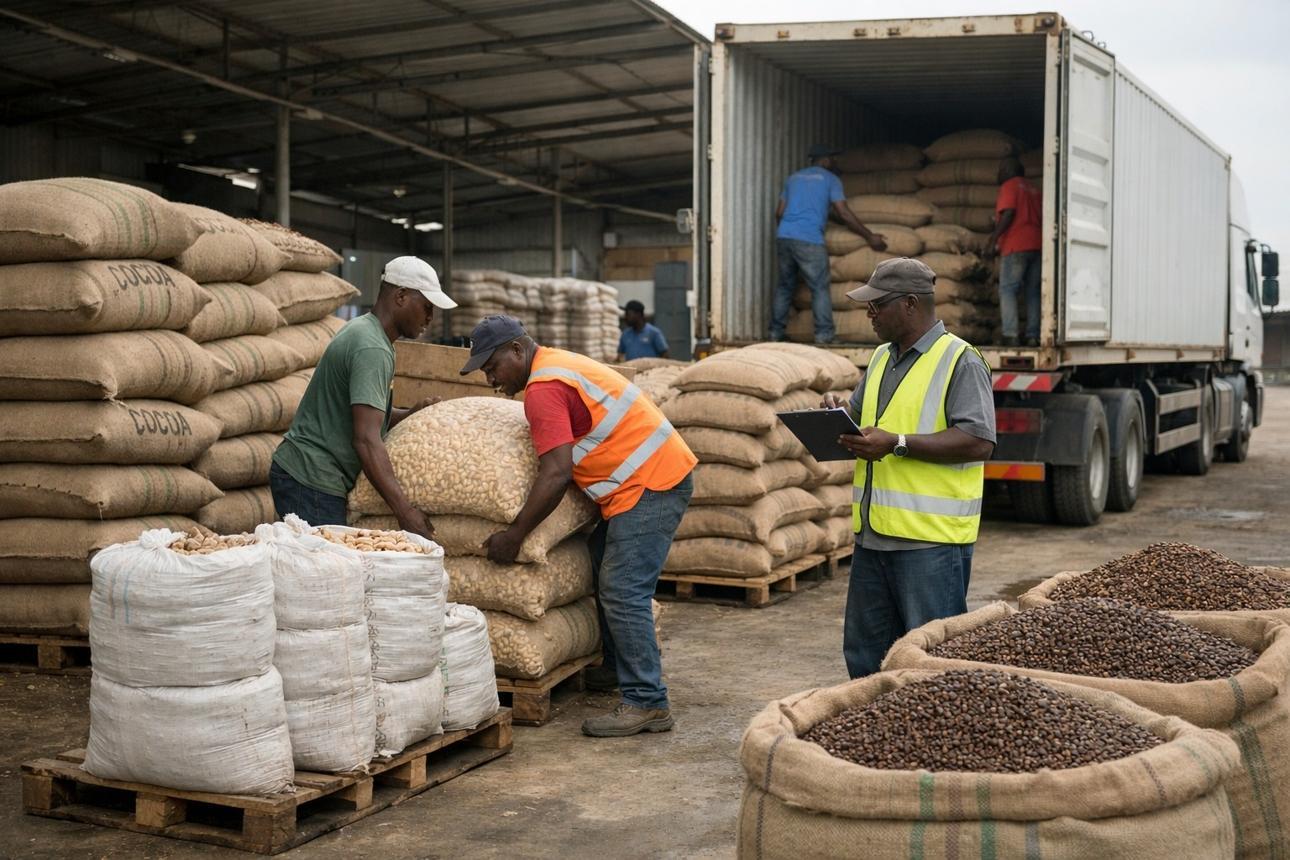
Nigerian cocoa is typically exported in new jute bags of 62.5kg net weight. Bags must be clean, properly sewn, and clearly marked with the grade, net weight, lot number, and country of origin.
Storage before shipment is critical. Cocoa must be stored in a cool, dry, well-ventilated warehouse away from strong odours. Contamination from chemicals, fuel, or other agricultural products will render the beans unsaleable.
Key Export Markets
The primary destinations for Nigerian cocoa are the Netherlands (the world's largest cocoa processing hub), Germany, Belgium, the United States, and Malaysia. Specialty and fine flavour cocoa from Nigeria is also finding buyers in the UK, Japan, and among craft chocolate makers globally.
Buyers in the EU are subject to the EU Deforestation Regulation (EUDR), which from 2025 requires cocoa exporters to demonstrate that their product has not contributed to deforestation. Nigerian exporters targeting EU markets should begin preparing traceability documentation now.
Working with Quardman Global
We source, grade, and facilitate the export of Nigerian cocoa beans to international buyers. Our team handles quality verification, documentation, and logistics coordination — ensuring your shipment meets buyer specifications and clears customs without delay.
Contact us to discuss your cocoa requirements or to request a product sample.
Need Help?
Have questions about this topic?
Our team can provide guidance tailored to your specific trade situation.
Ask Our Team